Neuroinclusion Self-Audit and Review Guide
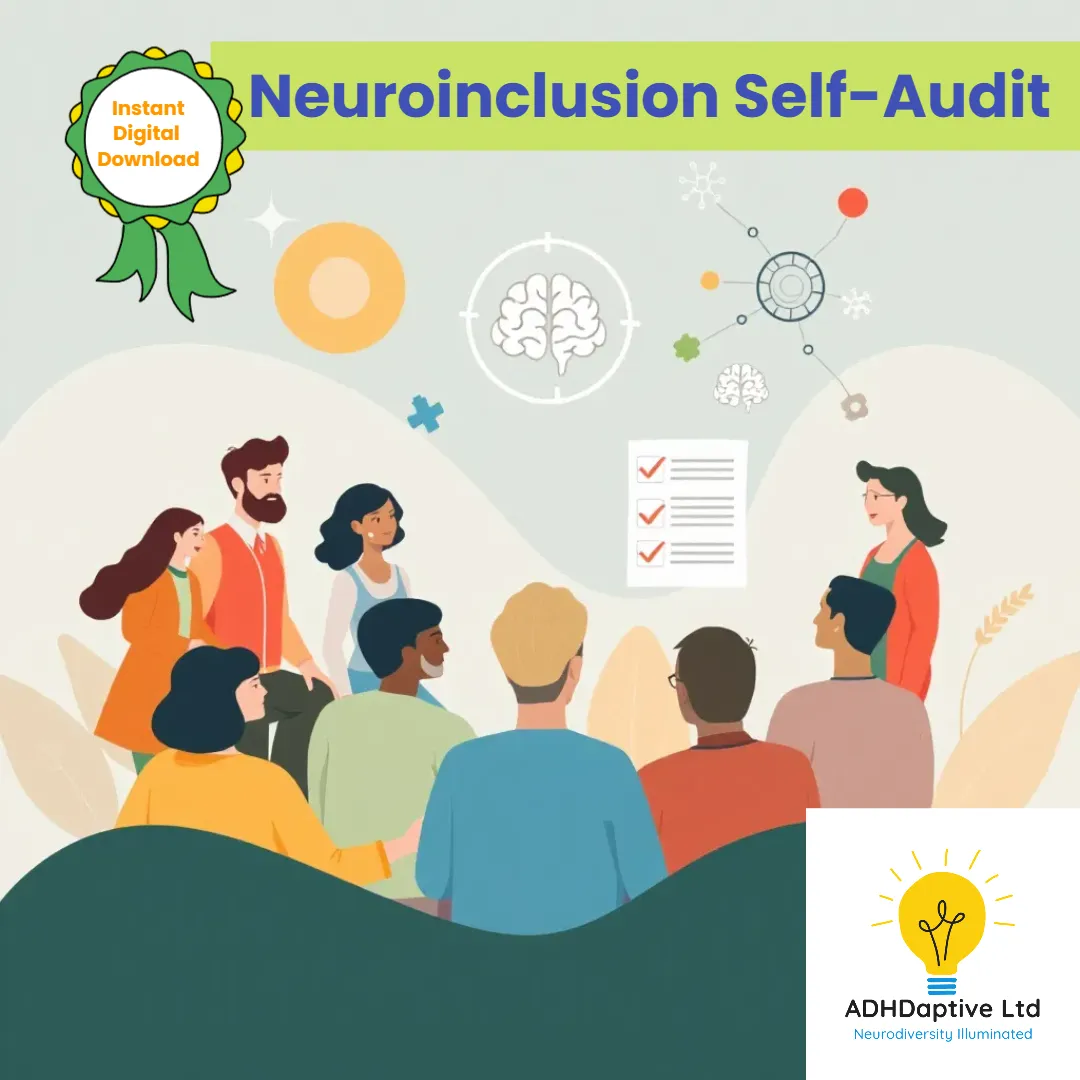
A guide to self-auditing and improvement
Workplaces are evolving, but neuroinclusion is still overlooked in many organisations. Supporting neurodivergent employees, including people with ADHD, autism, dyslexia and other cognitive differences, goes beyond basic compliance.
It needs policies, leadership and workplace culture that actively remove barriers and support different ways of thinking.
This post explores why neuroinclusion matters and how organisations can use the Neuroinclusion Self-Audit Guide to assess, review and improve their approach.
If you want a practical paid review rather than doing everything yourself, ADHDaptive now offers a Neuroinclusion Health Check. It looks at what is working, where pressure is building and what needs to change next.

What is neuroinclusion?
Neuroinclusion means creating an environment where all employees, including those who think, process and communicate differently, can thrive.
This includes:
- Adjusting workplace structures to support neurodivergent employees.
- Providing reasonable accommodations to meet individual needs.
- Training managers and teams on neurodiversity awareness.
- Removing barriers in hiring, communication and career progression.
Why does neuroinclusion matter?
A neuroinclusive workplace benefits everyone, not just neurodivergent employees.
- Improved productivity. Employees who receive the right adjustments can work more effectively and with less stress. Flexible structures can support focus, reduce distractions and make work less draining.
- Stronger employee retention. Workplaces that support neurodivergent employees are less likely to lose skilled people because of avoidable barriers, poor management or workplace stigma.
- Better problem-solving and creativity. Different thinkers can bring different perspectives. Some neurodivergent employees may be strong in pattern recognition, deep focus or creative thinking.
- Legal compliance and risk reduction. Under the Equality Act 2010, UK employers must make reasonable adjustments for disabled employees where needed. This can include people with ADHD, autism, dyslexia and other conditions where they meet the legal definition of disability.
Many organisations want to improve but do not know where to start. A neuroinclusion self-audit or review gives them a structured way to look at what is already working, what is missing and what needs to change next.

What is inside the Neuroinclusion Self-Audit Guide?
This digital resource helps HR professionals, managers and DEI teams assess, review and improve neuroinclusion across key areas.
- Policies and commitments. Are neurodiversity policies clear and usable?
- Recruitment and onboarding. Is your hiring process accessible to neurodivergent candidates?
- Workplace adjustments. Are reasonable accommodations offered and implemented properly?
- Training and awareness. Are managers and employees educated on neurodiversity?
- Feedback mechanisms. Do neurodivergent employees have safe ways to share concerns?
- Culture and leadership. Are leaders actively supporting neuroinclusion?
- External communications. Does your company publicly show its commitment to inclusion?
- Accessibility of resources. Are documents, tools and systems easy to navigate?
- Tracking progress. How is neuroinclusion measured and improved over time?
How to use the self-audit guide
- Download the guide. Get the digital PDF instantly.
- Assess each area. Use the checklists and self-audit table to identify strengths and gaps.
- Implement changes. Use the action steps in each section to improve neuroinclusion.
- Track progress. Use the self-audit table to document improvements over time.
Need a paid neuroinclusion review instead?
A self-audit is useful when you want to start looking at your own systems. But some organisations need another pair of eyes.
ADHDaptive's Neuroinclusion Health Check is a paid practical review for organisations that want to understand what is already working, where pressure is building and what needs to change next.
It is not a legal audit, diagnosis or tick-box exercise. It looks at work, pressure, communication, adjustments, management and support in real day-to-day practice.
- Useful if your organisation is not sure where to start.
- Useful if you already have policies or training, but support is not reaching daily work.
- Useful if managers want to support neurodivergent staff but do not know what to change.
- Useful if you want clear findings and practical next steps.

Take action on neuroinclusion in your organisation
Many organisations want to be more inclusive but do not have a clear route into the work. The Neuroinclusion Self-Audit Guide gives you a structured, practical way to look at whether neurodivergent employees feel supported and valued.
Taking this step can improve employee wellbeing, retention, productivity and compliance. Small, consistent changes matter more than a policy that looks good but never reaches day-to-day work.
If your organisation needs support with neuroinclusive workplace practice, ADHDaptive offers a paid Neuroinclusion Health Check, consultancy, training and practical workplace support.
FAQs
What is neuroinclusion at work?
Neuroinclusion means designing work so that people with different ways of thinking, processing and communicating can take part properly. It includes recruitment, communication, reasonable adjustments, management practice, workplace culture and career progression.
Why should employers self-audit neuroinclusion?
A self-audit helps employers notice where the barriers are before they become bigger problems. It can show gaps in policies, recruitment, adjustments, manager training, feedback routes and leadership accountability.
Does neuroinclusion only help neurodivergent employees?
No. Neuroinclusive practice can help everyone by making expectations clearer, communication cleaner, systems easier to use and support easier to access.
Are reasonable adjustments required in the UK?
Under the Equality Act 2010, UK employers have a duty to make reasonable adjustments for disabled employees where needed. This may include support for people with ADHD, autism, dyslexia and other neurodivergent conditions where they meet the legal definition of disability.
What is the difference between a neuroinclusion audit and a neuroinclusion review?
A neuroinclusion audit usually sounds formal and compliance-led. A neuroinclusion review can be more practical. It looks at what is working, where pressure is building and what needs to change next. ADHDaptive's Neuroinclusion Health Check is a paid practical review, not a legal audit.
Can I book a paid neuroinclusion review with ADHDaptive?
Yes. ADHDaptive offers a paid Neuroinclusion Health Check for organisations that want a practical review of work, pressure, communication, adjustments, management and support.
Can ADHDaptive help with workplace neuroinclusion?
Yes. ADHDaptive offers neuroinclusion consultancy, training and a paid Neuroinclusion Health Check for organisations that want practical help with neurodivergent staff support, reasonable adjustments, workplace culture and better ways of working.