
Are ‘Reasonable Adjustments’ Just Good Leadership in Disguise?
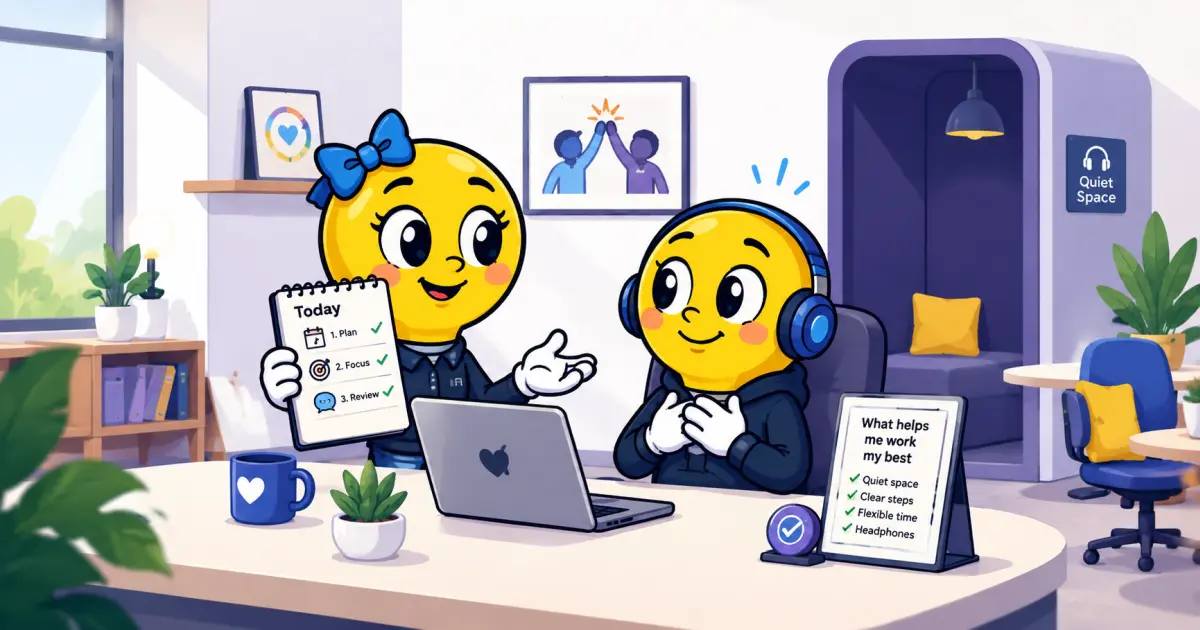
Reasonable adjustments or good leadership?
We still talk about reasonable adjustments as though they are unusual requests that sit outside normal management.
Sometimes they are individual changes for one person. Sometimes they involve equipment, working hours, duties or physical changes to a workplace.
But many of the things neurodivergent people struggle to get are painfully ordinary.
- Clear instructions
- Written follow ups
- A meeting agenda
- Time to process feedback
- Permission to work somewhere quieter
- A little warning before priorities change
That is the part I keep coming back to. Why does someone have to disclose a difficulty, ask formally and risk being labelled difficult before a workplace starts communicating clearly?
A surprising number of things people have to request as adjustments should already have been normal good practice.

Want to know whether support is working in practice?
If your workplace has policies and adjustment routes, but staff still have to fight for clarity, quiet space or basic flexibility, the ADHDaptive Neuroinclusion Health Check can help.
It looks at manager confidence, workplace friction and the gap between policy and real working life.
“But we can’t change everything for one person.”
That sentence always makes me mad. Not because every request must be accepted exactly as first asked, but because the sentence usually arrives before anyone has even looked at the problem.
It starts from the idea that the current way of working is neutral, sensible and fixed. The person struggling with it becomes the awkward variable.
Perhaps the better first question is not, “Why should we change this?”
It is, “What is getting in the way, and is there a sensible way to reduce it?”
That is a much better management conversation.
Good practice and reasonable adjustments are not the same thing
This distinction is important.
A workplace can give everyone clearer instructions. It can make a quiet room available. It can allow people to use headphones where the work permits it. It can send meeting agendas before meetings rather than five minutes after they start.
Those are general working practices.
An individual worker may still need a particular change because a disability places them at a disadvantage. That is where the reasonable adjustment duty matters.
Offering better support to everyone does not remove the duty to look at individual adjustment needs. Acas makes this point directly in its guidance on neuroinclusive workplaces.
So yes, good leadership can prevent a lot of unnecessary friction. It cannot be used as an excuse to avoid an individual adjustment request.
What people are actually asking for
Some requests are complicated. Many are not.
I have seen people treated as demanding for asking for things that would barely register if a senior manager asked for them.
- Clear written priorities
- Written follow ups after verbal instructions
- Flexible start and finish times where the role allows it
- Quieter working space
- Time to process feedback before responding
- Agendas and papers before meetings
- Camera flexibility in online meetings
- Clothing flexibility where there is no genuine operational reason to restrict it
- Permission to use headphones or other sensory support
- Clearer warning when priorities or deadlines change
For some people these are preferences. For someone else, the same change can be the difference between being able to work and spending the whole day fighting the environment.
That is why the conversation has to stay individual.
The workplace can create avoidable friction
Neurodivergent people are not broken. At the same time, ADHD, autism and other conditions can create real difficulties even in a supportive workplace.
The point is not that every problem disappears when an employer behaves well.
The point is that workplaces can add a lot of avoidable difficulty on top.
Noise that nobody needs. Vague instructions. Priorities that change without warning. Meetings with no purpose. Feedback delivered badly. Managers treating a request for help as a character problem.
Those things are not inevitable features of work. They are choices, habits and systems.
Changing them will not solve every difficulty. It can stop the workplace making things harder than they already are.
What happens when someone does ask?
Asking for what you need at work can feel risky, especially after years of being misunderstood.

Imagine saying, “I’d like written feedback after meetings. It helps me take it in better.”
Then the tone changes.
Someone looks uncomfortable. A colleague makes a comment about special treatment. The manager says, “We cannot do this for everyone.”
You walk away wondering whether asking was worth it.
That experience has a cost. The person may stop asking. They may hide difficulties until something goes wrong. They may use huge amounts of energy pretending they are coping.
Good managers make asking safer. Not by promising yes to everything, but by listening properly, taking the request seriously and having a sensible conversation about the barrier.
What the law actually says
For employers in Great Britain, the Equality Act 2010 creates a legal duty to make reasonable adjustments for disabled workers and applicants where the duty applies.
Acas describes a reasonable adjustment as a change an employer makes to remove or reduce a disadvantage related to someone’s disability.
A person does not need a formal diagnosis to meet the legal definition of disability. Acas also advises employers to offer support to neurodivergent workers whether or not they have a diagnosis.
The word reasonable matters too. What is reasonable can depend on the circumstances, the barrier, whether the change would work, the cost and the employer’s resources.
Some adjustments involve little or no cost. Others can involve equipment, physical changes, altered hours or changes to duties.
This is why I would not tell managers to treat every request as an informal favour. The legal duty and the human conversation sit alongside each other.
For detailed guidance, read the Acas guidance on reasonable adjustments and the GOV.UK guidance for employers and workers.
Someone has asked for an adjustment. What happens next?
A manager does not need to become an employment lawyer in the next thirty seconds.
They do need to avoid making the situation worse.
- Listen without immediately challenging the request
- Ask what barrier the person is experiencing
- Ask what they think might help
- Avoid demanding a diagnosis as the first response
- Agree anything simple that can be tried now
- Write down what has been agreed
- Involve HR, occupational health or specialist advice where useful
- Agree a review point
- Check whether the adjustment is actually helping
That last point is easy to miss.
An adjustment is not useful because it exists in an email. It is useful if it reduces the barrier it was meant to address.
Needs can change too. A change in role, workload, location, health or management can mean an old adjustment needs reviewing.
Legal compliance is only part of the story
The Equality Act sets legal duties. It cannot write your meeting agendas, train every manager or make people feel safe enough to speak.
Culture is built in ordinary moments.
What happens when someone says they are overloaded?
What happens when a person asks for written instructions?
Does the manager become curious, or defensive?
Does the team see flexibility as normal, or as something suspicious?
Culture is not built by policy alone. It is built by leadership.
What good practice can look like
These are not a substitute for individual reasonable adjustments. They are examples of better everyday management that can reduce unnecessary friction before someone has to ask.

Clear instructions
Do not just say “ASAP” or “get this sorted”. Say what you need, when you need it and what a useful result looks like.
Written follow up
Not everyone can hold a fast verbal conversation in working memory. A short written recap can save confusion later.
Predictable meetings
Send an agenda. Say what decision is needed. Start and finish when you said you would.
Sensory flexibility
Think about noise, lighting, clothing rules, cameras and movement. Ask whether the restriction is genuinely needed for the job.
Choice where choice is possible
Focus on the work and agreed outcomes. Do not control every step just because one route feels familiar to the manager.
Clear priorities
When five things are described as urgent, the worker has not been given five priorities. They have been given a guessing game.
What to do and what to avoid
Do
- Write agendas and intended outcomes before meetings
- Follow up important verbal instructions in writing
- Give clear deadlines and explain which priority comes first
- Ask “what would help?” rather than guessing
- Keep a written record of agreed individual adjustments
- Review whether an adjustment is working
- Let people use different working methods where the role allows it
- Make ordinary support easier to access without unnecessary disclosure
Do not
- Say “we have always done it this way” and treat that as an answer
- Demand a diagnosis before discussing the barrier
- Assume neurodivergence looks the same in everyone
- Label someone difficult because they asked for clarity
- Treat an agreed adjustment as a favour that can disappear when a manager gets annoyed
- Assume a policy proves the experience on the ground is good
So why the resistance?
Sometimes it is fear of change.
Sometimes it is worry about fairness.
Sometimes managers think that flexibility will spread until nobody follows any rules at all.
And sometimes, I think, it is much simpler. The workplace has never asked its most powerful people to explain every preference as a formal need.
A senior person wants a quiet room for an important call. Fine.
A director needs a meeting moved. Fine.
Someone with less power asks for a predictable schedule or written follow up, and suddenly the organisation discovers a deep interest in precedent.
That inconsistency is worth noticing.
Let’s call good leadership what it is
Clear communication is good leadership.
Listening before judging is good leadership.
Making ordinary support easy to access is good leadership.
Taking an individual adjustment request seriously is also good leadership.
The point is not to collapse all of those things into one vague idea of kindness. The point is to stop making people fight for every small thing that could have been handled well from the start.
A better question
So next time you hear, “We can’t change everything for one person”, pause before accepting the premise.
Ask what the barrier actually is.
Ask whether the current way of working serves a real purpose.
Ask what could be changed for everyone and what needs to be considered individually.
Then ask the question I keep coming back to: what would this workplace look like if it were built to fit more than one kind of mind?
FAQ
Are reasonable adjustments at work only for neurodivergent staff?
No. Reasonable adjustments can apply to disabled workers and applicants with many different conditions. For neurodivergent staff, possible adjustments can include written instructions, quieter space, changes to working patterns, equipment or other individual changes. The right adjustment depends on the person and the barrier.
Do you need a formal diagnosis to ask for support at work?
No. Acas says a worker does not need a diagnosis to be considered disabled under the Equality Act 2010. An employer should discuss the difficulty and what support may help rather than treating diagnosis paperwork as the whole conversation.
Can good workplace practice replace reasonable adjustments?
No. Clear communication, quieter spaces and flexible practices can help many people, but general support does not replace the legal duty to look at reasonable adjustments for an individual where the duty applies.
How can managers handle reasonable adjustment requests better?
Listen first. Ask about the barrier, discuss what may help, agree next steps, record what has been agreed and review whether the change is working. Bring in HR, occupational health or specialist advice where useful.
Can ADHDaptive review how our workplace handles reasonable adjustments?
Yes. The ADHDaptive Neuroinclusion Health Check looks at manager practice, adjustment routes, workplace culture and the gap between policy and everyday working life.
Need to review how reasonable adjustments work in your organisation?
If people still have to battle for clarity, flexibility or support, it may be time to look at how the system works in practice.