ADHD Burnout in University Staff
You are still showing up. You are still responding. Things are still getting done.
From the outside, you look normal. You look reliable.
But inside, something isn’t right.
You are slower. You feel more drained. You find it harder to complete tasks. You find it hard to even get started.
That is what ADHD burnout often looks like in university roles.
It isn’t a total collapse. It’s slow, subtle erosion.
ADHD burnout in university staff: what it actually feels like
It doesn’t always look like burnout.
It feels like:
- things take more effort than they used to
- your brain won’t settle on one task
- small decisions feel harder than they should
- you’re constantly behind, even when you’re not
- starting becomes harder than doing
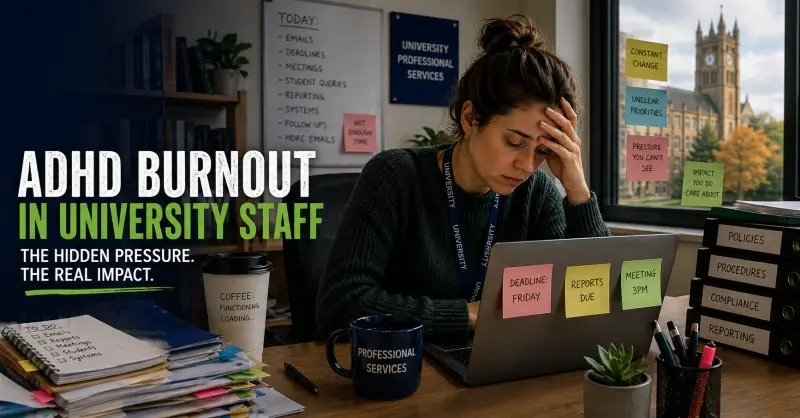
At the same time, higher education professional services roles are full of pressure that isn’t always seen.
Things like:
- constant task switching
- unclear or conflicting priorities
- changing deadlines
- responsibility without any real control
- emotional labour from supporting staff and students
None of these, on their own, is unusual. But together they create a place where your brain doesn’t get a break.
If you have ADHD, the effect of this is compounded.
Because you are already using more effort to:
- prioritise
- switch between tasks
- keep things in your head
- manage time
So what looks like a normal workload can quietly push you past your limit.

The hidden pressure in professional services
One of the biggest issues is that you are accountable for outcomes that you don’t fully control.
You might be:
- managing systems that you didn’t design
- responding to decisions made elsewhere
- working to deadlines that keep changing
- expected to stay calm and professional no matter what
This creates a tension that sits in the background.
You are always slightly on edge. Always looking for the next problem.
Over time, this builds up and becomes exhausting.
Why it doesn’t feel like burnout
When people talk about burnout, they usually describe:
- emotional exhaustion
- detachment
- reduced performance
But in reality, especially in professional services roles, it often starts as:
- frustration
- confusion
- self-doubt
You may think:
“I should be able to handle this”
“Why am I struggling with this? It used to be easy”
“I just need to try harder”
So instead of recognising it for what it is, you push harder.
That makes things worse.
How ADHD makes burnout harder to spot
If you have ADHD, you are probably used to:
- things feel harder than they should
- needing different ways of working
- having inconsistent energy and focus
So when burnout starts to set in, it blends in.
It becomes “just the ADHD”.
That’s why people often don’t notice it until it’s too late.
They just adapt.
Push. Mask. Carry on.
Until something gives.

What actually helps
You can’t change the system. But you can change how you work in it.
Some things that can help:
- writing things down instead of trying to remember everything
- following up conversations with an email to create clarity
- breaking work into smaller, more visible steps
- asking confirmation when priorities are unclear
- recognising when the system breaks, it isn’t a personal failure
If this sounds familiar
You are not failing. You are working in a system that creates pressure in ways that are not obvious.
If you want to read more, you may find these helpful:
- Pressure and burnout in HE professional services
- Pressure without control in university systems
- ADHD, autism and gaslighting at work
Or if you are at the point where you just need to talk, that is a real option.
Frequently asked questions
What does ADHD burnout in university staff look like?
ADHD burnout in university staff can look like slower work, drained energy, harder task initiation, difficulty making decisions and a sense that normal work now takes more effort than it used to.
Why can professional services roles lead to ADHD burnout?
Professional services roles can involve constant task switching, unclear priorities, changing deadlines, emotional labour and responsibility without full control. That combination can be especially draining for someone with ADHD.
Why is ADHD burnout hard to spot?
ADHD burnout can blend into existing ADHD patterns, such as inconsistent focus, variable energy and needing different ways of working. This can make burnout feel like “just the ADHD” until the pressure becomes too much.
What helps with ADHD burnout at work?
Helpful changes include writing things down, following up conversations by email, breaking work into smaller steps, clarifying priorities and recognising when workplace systems are creating pressure that should not be carried as personal failure.
Where can university staff get support?
University staff can look for workplace adjustments, occupational health support, Access to Work, coaching or practical support around workload, task initiation, prioritisation and communication.
Want more like this? Head over to the blog for practical, real-world support around ADHD, work and pressure.
View Blog Home